
Tulum · 6 min read
Where to find the cenotes locals keep quiet about
February 12, 2026
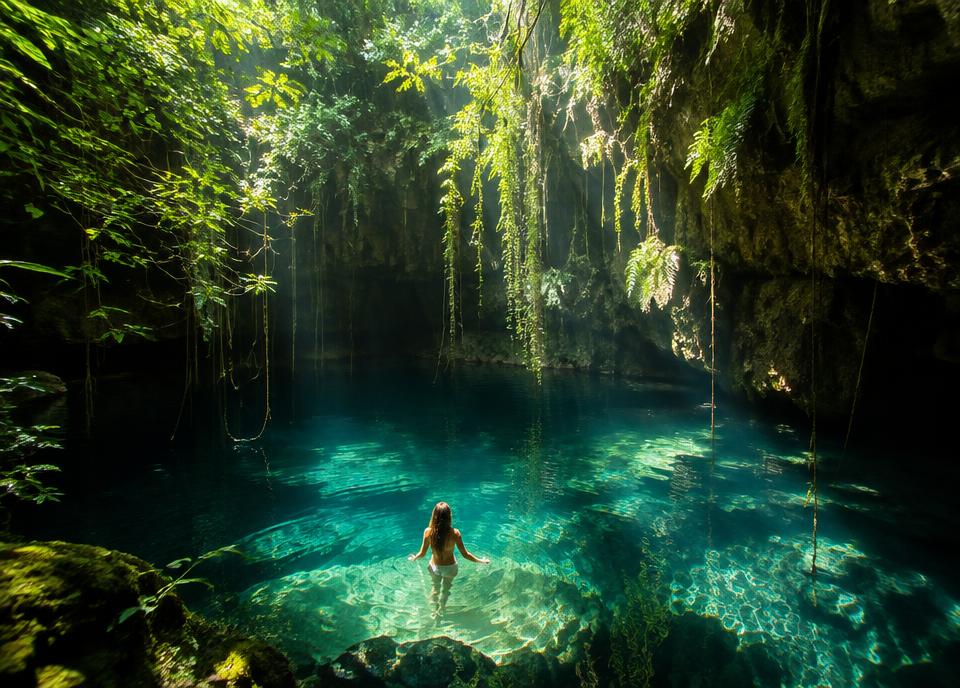
Every winter, travelers arrive on the Yucatán with the same map: the same four famous cenotes, the same 9 a.m. line, the same rope-swing photo. There is nothing wrong with the famous ones — they became famous honestly. But the peninsula holds hundreds of these flooded limestone caves, and a surprising number of them still belong, on any given weekday, mostly to birds and a family selling pan dulce at the gate.
The trick is not secret coordinates. The trick is rhythm and timing. Cenotes are a morning activity or a late-afternoon one — between 11 and 3 the tour buses own them, the light flattens, and the water loses the cathedral glow that makes a cenote swim unforgettable. We plan our clients' cenote days around two windows: first light, when steam rises off open pools, and the last two hours before sunset, when sunbeams drop straight through the openings like stage lights.
A quiet day, routed right
Start at a lesser-known open-air cenote in the rancho country south of Tulum — one with a family kitchen on site, not a gift shop. Swim before 10, then let the morning get busy while you eat: handmade tortillas, cochinita pibil, the kind of lunch nobody remembers to photograph.
Save the second swim for a cave cenote in the afternoon, when the light finally reaches the stalactites. Two swims, one unhurried lunch, and you'll understand why we never route more than two cenotes in a day. The water rewards presence, not pace.
A few practical notes
Bring cash — many family-run cenotes don't take cards. Biodegradable sunscreen only, and ideally none at all: most cenotes ask you to rinse before swimming. And if you fall in love with one, tip the family. These places are someone's backyard before they're anyone's destination.
If you'd like us to build this day — and a week around it — into your itinerary, that's exactly what we plan for you.